

News & Articles
Moving to a Lincolnshire care home from Norfolk or Cambridgeshire: how funding works

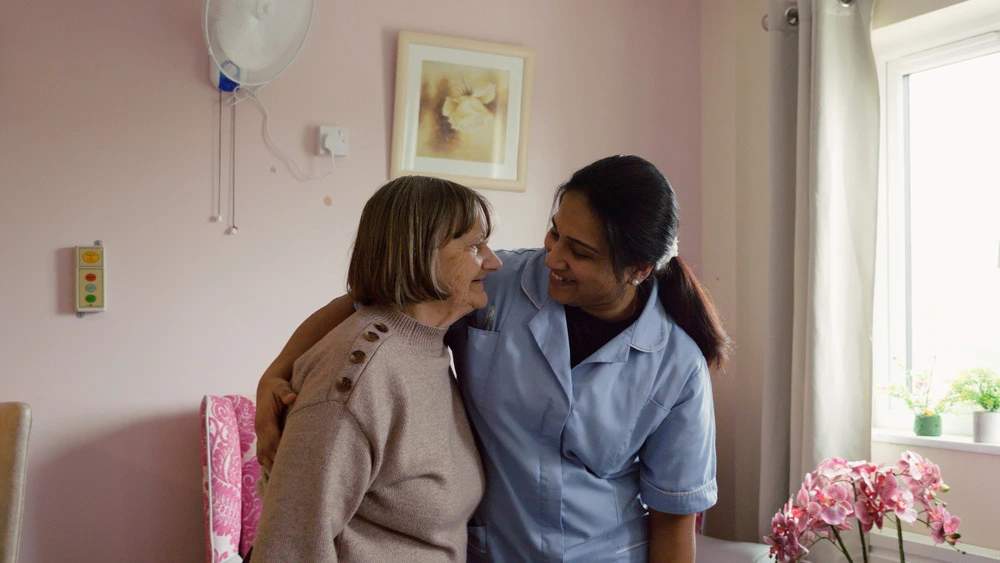
Kimberley Care Village is in Long Sutton, close to where Lincolnshire meets Norfolk and Cambridgeshire. Many families who ask about the home live in Wisbech or King's Lynn, and they ask the same thing: if my parent lives in Norfolk or Cambridgeshire, can their council still help pay for a care home in Lincolnshire?
This guide gives plain answers. It covers England only and is correct for 2026 to 2027.
The short answer
- Yes, in most cases. You can ask your council to fund a care home in another county, as long as the home can meet the person's needs, has a place, and accepts the council's terms.
- The means test is the same everywhere in England. Lincolnshire, Norfolk and Cambridgeshire all use the same savings limits. Only each council's usual rate and paperwork differ.
- If your own council arranges and pays for the care home, it stays responsible, even though the home is in Lincolnshire.
- If you pay for yourself and move, you normally become the responsibility of the council where the home is. If your money runs low, you would apply to Lincolnshire County Council.
- Councils pay their own standard rate. If the home charges more, the difference is called a top-up, and family can pay it.
Which council is responsible?
Councils are responsible for people who are "ordinarily resident" in their area. In plain English, that means where you normally live. Where a care home is does not always change that.
The money rules
These are national rules, so crossing the border does not change them. The figures below apply for 2026 to 2027. For a wider look at costs, see care home fees explained.
A few things that catch families out:
- Your home counts as an asset, unless a partner or certain relatives still live there.
- The 12 week rule. If the council is arranging your care and you have less than £23,250 in other savings, it may ignore the value of your home for the first 12 weeks of a permanent stay. This gives you time to decide what to do.
- Deferred payment agreement. This lets you delay selling your home to pay the fees. Ask the council whether you qualify.
Top-ups: when the home costs more than the council pays
A council pays up to its own standard rate for the type of care needed. Homes often charge self-funders more than that, so there can be a gap. That gap is called a top-up.
For example, if a council's rate for a place is £900 a week and the home's fee is £1,000, the top-up is £100 a week. These figures are for illustration only.
What to know:
- A top-up is normally paid by a third party, such as a family member, who signs a written agreement with the council.
- The person living in the home usually cannot pay the top-up themselves. The exceptions are during the 12 week rule and under a deferred payment agreement.
- A council cannot ask for a top-up if it has no suitable home available at its usual rate.
- Before agreeing to a top-up, ask what happens if it becomes unaffordable. You may be asked to move.
- If you choose a home in another county, the statutory guidance says the council should look at what care normally costs in the area of the home when setting the budget. Ask for the figure in writing, and ask how it was worked out.
NHS funding
If someone has serious ongoing health needs, the NHS may pay for their care through NHS Continuing Healthcare. Our guide to NHS funding for care homes explains what you may be entitled to. The rules are national, so eligibility depends on the person's needs, not on where they live.
Which NHS body pays can depend on who arranges the placement and where the person is registered with a GP. Lincolnshire, Norfolk and Waveney, and Cambridgeshire and Peterborough each have their own integrated care board (ICB). If you think NHS funding might apply, ask your current ICB about an assessment before the move, not after.
Before you move: a checklist
- Ask your council for a care needs assessment. Anyone who appears to need care is entitled to one, whatever their savings.
- Ask for a financial assessment, so you know whether the council would contribute.
- Ask the council in writing: will you fund a home in Lincolnshire, what is your rate for this type of care, and would a top-up be needed?
- Ask the home for its fee for the type of care needed, and whether it accepts council-funded residents and top-ups.
- Ask about NHS Continuing Healthcare if there are serious health needs.
- Check Attendance Allowance. It usually carries on while you pay for yourself and usually stops once the council pays for your care.
- Plan ahead for savings running low. Tell the council in good time, ideally a few months before savings reach £23,250, and ask the home what would happen to the place.
For big decisions, such as selling a home, get independent advice. Age UK and Independent Age offer free guidance, and a specialist care fees adviser can look at your finances in detail.
Who to contact
- Norfolk County Council adult social care, for families in King's Lynn and the rest of Norfolk.
- Cambridgeshire County Council adult social care, for families in Wisbech and the rest of Fenland.
- Lincolnshire County Council adult social care, for families in Long Sutton, Holbeach and Sutton Bridge, and for anyone who moves to Kimberley and pays for themselves.
When you call, ask for adult social care and say you need a needs assessment and a financial assessment.
Common questions
Will my parent lose council funding if we choose Kimberley? No. If their own council is arranging and paying for the placement, it stays responsible, even though the home is in Lincolnshire. The council may limit what it pays to its budget for that type of care, which is where a top-up can come in.
We are self-funding. If the money runs out, who pays? Normally the council for the area where the home is, which is Lincolnshire County Council if your parent has moved to Kimberley. Contact them before your savings reach the limit, and talk to the home about the place.
Can we pay a top-up directly to the home? Not usually. The council must agree it in writing, and a family member or friend normally pays it. The person living in the home can only top up during the 12 week rule or under a deferred payment agreement.
Does the 12 week rule still apply if the home is in another county? It is a national rule, so moving across a county border does not remove it. It applies when the council is arranging the care and your other savings are below £23,250. Ask your council to confirm in writing.
Does moving counties change NHS Continuing Healthcare? Eligibility is the same everywhere in England. Which ICB pays can change, so ask your ICB before you move.
Can a council refuse because the home is out of area? A council cannot refuse only because the home is in another county. It can say no if the home cannot meet the person's needs, has no place, or will not accept the council's terms. Ask for the reason in writing.
Related reading
- Paying for respite care
- How much does dementia care cost in the UK?
- A family guide to care funding
- Care homes in Lincolnshire
Talk to Kimberley Care Village
Kimberley Care Village is at 21 London Road, Long Sutton, Lincolnshire, PE12 9EA. Care fees start from £1,100 a week. We offer residential care, dementia care, respite care and palliative care, as well as high dependency care.
Call 01406 364309 to ask about current fees for the care you need, whether we can accept council funding and top-ups, and to book a viewing. You can also make a care enquiry online.
This guide is general information for England, correct at October 2026. It is not financial or legal advice. Each person's situation is different, so check with the relevant council and take independent advice for big decisions.
Sources: Care Act 2014 (sections 18, 39 and 40); Care and Support Statutory Guidance (chapter 19 on ordinary residence and Annex A on choice of accommodation and top-ups); GOV.UK, Social care charging for care and support 2026 to 2027: local authority circular.